Tuesday, May 22, 2007

Why muzungu prices are good

In Rwanda, as in much of Africa, foreigners experience what can perhaps be described as racial pricing. Bazungu (white people/plural of Muzungu) pay more than Rwandans or black Africans for the same products and services. It is occasionally possible to negotiate a Rwandan price, but often a local will simply refuse to sell. And this is not simply a question of the bad negotiation skills of the bazungu: prices asked have become standardised into “Rwandan” and “Muzungu” prices:


This practice infuriates most bazungu in Rwanda, who will generally try to negotiate the seller down to the Rwandan price. But should we be so annoyed?

We do it aswell.

In Europe, a plane ticket for a business traveller on a intra-European flight may cost for example 800 Euros. A private but wealthy traveller who plans a private visit and researches a few cheaper offers may pay 600 Euros for the same flight. A slightly less wealthy tourist, who plans his holiday well in advance, may get the same flight for 400 Euros from the same major airline. Also, airlines offer “student discounts”, “pensioner discounts” and special offers for tour operators that could get that price down to 250 Euros.

This is price differentiation in Europe and it is found not only amongst the airlines, but also amongst other services (cinema tickets, train tickets, …) and even products (a book in a student bookshop costs less than at a gift shop in the centre of town). It is an intelligent way of getting different types of customers to pay the optimum price in order to maximise turnover.

So what about the bazungu?

In a sense, African businessmen, traders and taxi drivers have instinctively understood a mechanism that is part of every economic and business course in Europe. To get the most money out of your customers, you try to separate them into groups of rich and poor, and then charge them different prices. This is simply good business sense. It also allows businesses to charge lower prices to those people who might otherwise be too poor to buy a product or service.

Not to mention all the damage that we bazungu do to the local economy…

… because we push up local prices. This is most obvious in the rent prices in Kigali, which are on a level with Paris or London. But bazungu also increase the demand for food, imported goods, petrol and so on. If a Rwandan trader had to set the same price for everyone, the prices would rise as the expatriates move in and go shopping. This rise in prices would make the survival of poor Rwandans even harder.

So if you are ever in Africa, pay your bazungu prices with a smile and hope that you are always paying more than the locals. This is not only better for business, but also better for the poor.


(lower income market segment)

(upper income market segment)

Friday, April 27, 2007

Zanzibar

At some point in 2006 I seem to have lost the ability to become bored. I am able to sit in a quiet place and just be satisfied doing absolutely nothing except watch the world go by. Every moment without worrying about to visas, e-mails, tax declarations, meetings, flight schedules and contracts, is bliss. I went to Zanzibar hoping to rediscover my ability to get bored. I didn’t find it. Instead I found a beautiful island floating in warm Indian Ocean with a mazelike old town, idyllic beaches and great people to keep me company.

Life is good.


On a completely different subject, if anyone wants to do micro-hydro power projects in Rwanda… ;) … this might interest you.

Sunday, March 11, 2007

Links

I haven't posted in a while. This is partly because of a battle with a computer virus that managed to destroy my harddrive twice before I won. But now that crisis is over...

On a completely different subject: Over time I have added and removed several links in the sidebar of this blog. Just to explain some of them...

- Farhad Cooper's LiveJournal - Although this guy hasn't updated his journal in ages, he had one of the most interesting starts to his career that I have ever heard of. A former engineering student at Imperial (like me), he then went on to study medicine and traveled/worked in Ghana, the Caucasus and the States before settling back in the UK. His archives from 2005 are pretty interesting reading.
- My Little Univierse - This is my sister's blog. She is doing a masters in Film in Utrecht and is also starting up a film production company.
- Baked Beans on Toast - The blog of David: my roommate at university. A rather odd mathematician, who has settle down to a peaceful family life in the UK. :)
- Cognition - Stephen's site: a renewable energy brother-in-arms in South Africa. One of the things I appreciated most working in the renewable energy sector in South Africa is the energy and creativity of the private sector in a difficult political environment.
- Rwandatales - Aoife: someone who has been in Rwanda too long and is far too sane for development assistance work. If you don't become cynical working in development assistance, then you're probably just naive.
- Vom Wind Getragen - A cyclist who has been on the road in Africa for about a year. He stayed at our house on his way from Kampala to the Congo.
- Jared's blog - An interesting guy, relatively new to Rwanda, who has started up an NGO that supports former prostitutes.

And to finish this post, a picture that has very little to do with anything at all. This is my windows wallpaper: Wenchi Crater in Ethiopia, where I was in January.

Friday, February 09, 2007

Singapore of Central Africa?

On a development blog NextBillion, there were recently a couple of articles on Rwanda. 2 that I left comments on are "Toward Rwanda" about the ambition of developing Rwanda as the "Singapore of Central Africa" and another article about the prioritisation of electricity.

Friday, December 15, 2006

Paul

This is quite a revealing interview with President Paul Kagame by the BBC. I only wish Kagame had made a clearer case on the involvement of the international community in the Rwandan genocide, which is indeed scandalous. But this is some welcome publicity for certain issues on both sides of the argument. Click here to watch the interview (RealPlayer file).

Monday, December 11, 2006

Lake Muhazi (video)

This clip is from a 2-day visit to lake Muhazi. A beautiful place, about 70km to the North-East of Kigali.

Sunday, December 10, 2006

Privatisation in Rwanda

This will probably only be of interest to Rwanda-philes and energy sector people. But the FT published a very interesting article on the privatisation of Rwandan utilities.

Working on the development of small private sector companies in the energy sector, I am very much aware of the painfully slow privatisation process in the energy sector. My comments on this are also on the World Bank's Private Sector Development Blog:

"Privatisation has to be about more than selling off state assets. It needs to be as much about transparent regulation and stimulating competition. The telecoms sector in Rwanda is still lacking much-needed competition. As for the lack of progress in the energy sector, this sector could move ahead even whilst Electrogaz' privatisation is paralysed by its high generation costs. But for this, Rwanda would need to introduce clear regulation that opens the way for private sector investors to challenge the poor levels of delivery of Electrogaz' defacto (but no longer legal) monopoly."

Monday, October 02, 2006

Ruhengeri and surroundings (video)

This is my first experiment with moving pictures. This is a clip from the road in Northern Rwanda in and around Ruhengeri. Music is by the Congolese group Franco et le TP OK Jazz. Enjoy.

Monday, September 18, 2006

Rwanda's disappearing hills

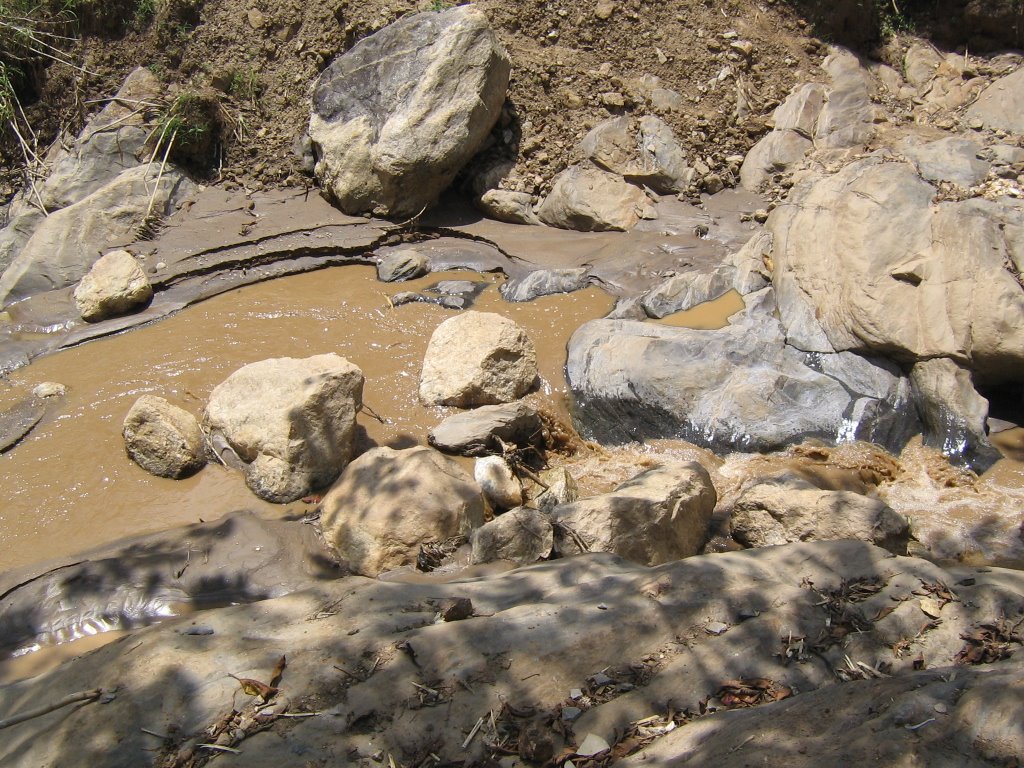
Rwanda has a erosion problem. A big erosion problem. It is a densely populated country that lives off agriculture. The hills are gradually being washed away by rivers and rain. Terracing (which would reduce erosion) is a little-known concept here. What you see in the first picture, is a river that is full of mud and sediment being washed downstream and eventually into the Nile. The rocks, are all that will be left when the soil has been washed away.

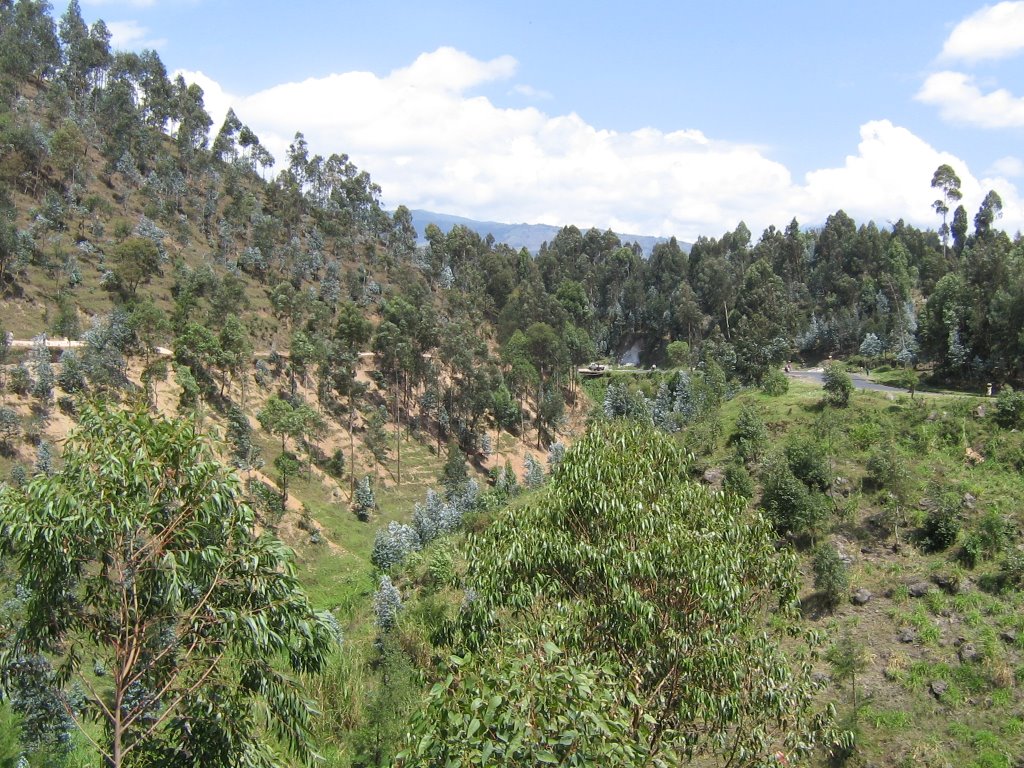
Some years ago, several provinces started planting trees to reduce soil erosion. Many of these trees were Eukalyptus. Eukalyptus grows fast. Great. But it also requires alot of water. And Rwanda has a water shortage problem. In the second picture you can see the Eukalyptus trees easily: they are the ones with very light green leaves. Eukalyptus also competes with slower-growing local tree species.

The last episode in this story is that now, Eukalyptus trees are apparently no longer planted, and there is a general ban on felling trees.

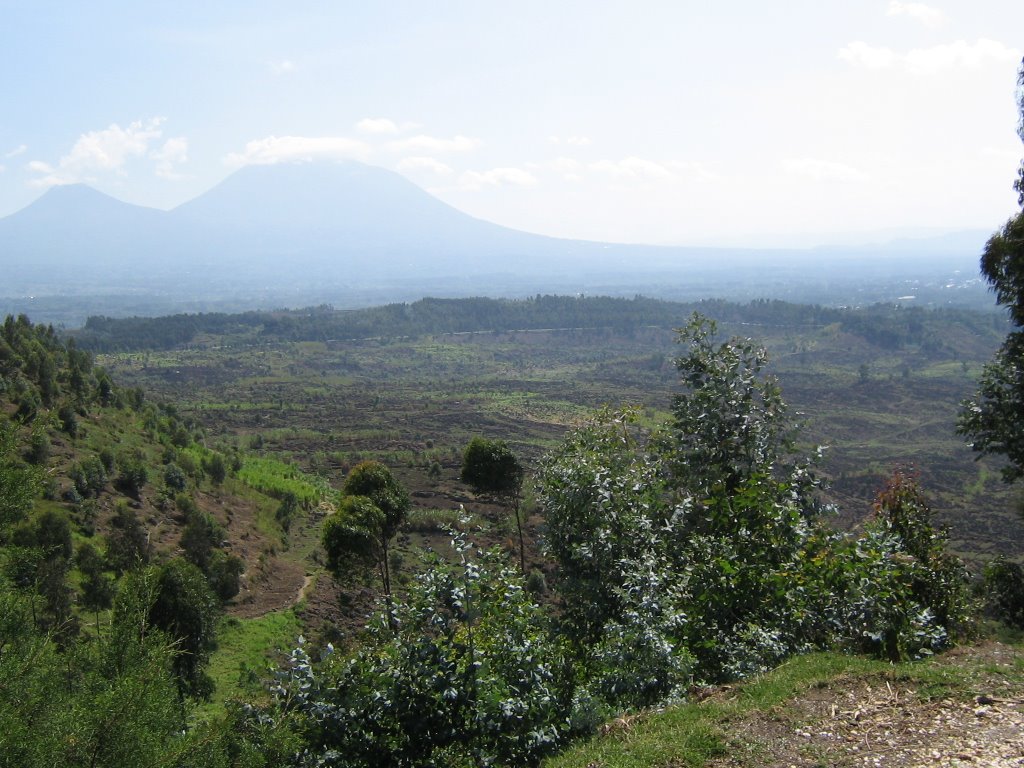
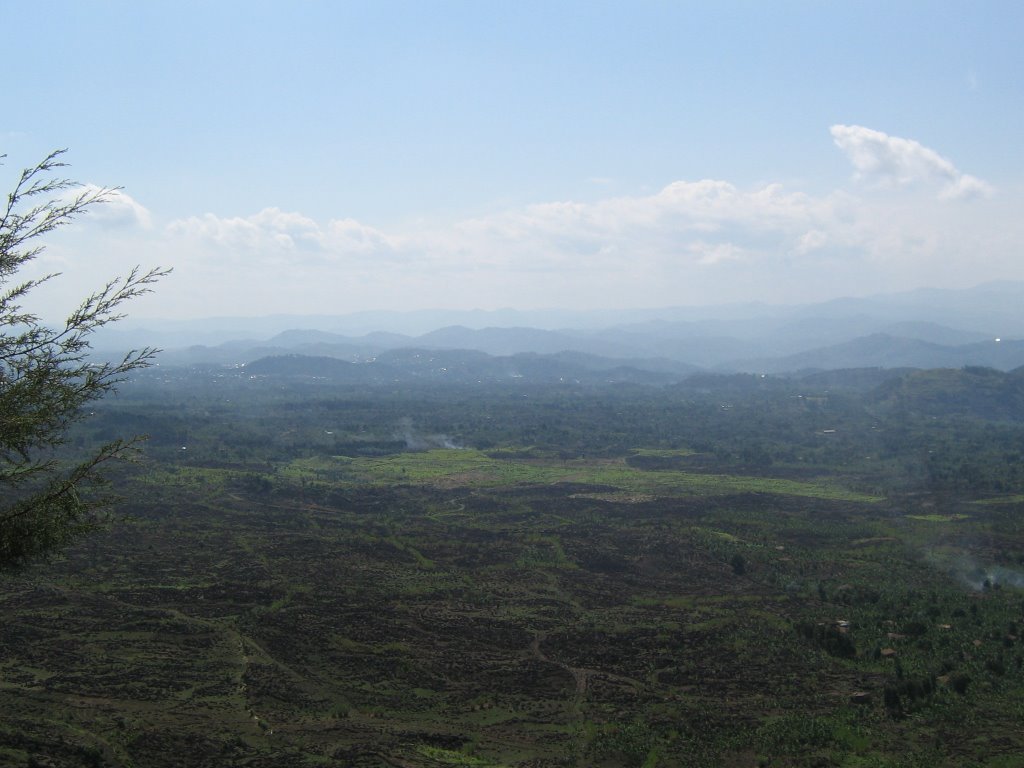
The last 2 pictures actually have nothing to do with this subject. But it is a beautiful view over the (active) volcano landscape in the North-West of Rwanda.

Tuesday, August 29, 2006

Those funny rich Muzungus

A conversation with our (Rwandan) housekeeper:
- How much do soup plates cost here?
- 1000FRW per plate
- 1000FRW?? surely there must be some cheaper ones.
- No. 1000FRW for some plates which look nice and are also presentable for guests.
- But we really just need something simple and cheap.
- Well, ok, there are some that are cheaper, but they are not so nice. And not... (she giggles shyly) ... not good enough for white people.

I didn't know what to say after that.

This story is representative of the relationship between normal Rwandans and Muzungus in Rwanda. (Although I suppose having a housekeeper also contributes to this attitude.) We're rich, we eat better food, we wear new clothes (instead of second hand clothes), we drive everywhere (never walk), we shop in La Galette (the expensive German supermaket inRwanda) and even if we walk into a "normal" Rwandan shop we still pay Muzungu prices (10-20% more).

Going against the expected norms of behaviour generally creates confusion, alienation ("What are these funny Muzungus doing now?") and sometimes embarassement ("Why is this rich Muzungu in our dirty little bar?"). Luckily, attitudes are softening a little in Kigali (people don't even turn their heads anymore when I walk into my local cafe) although in parts of the countryside, one could get the impression that little has changed since the first white explorers wandered through. You can get out of your car in an apparently abandoned part of the countryside, and within 3 minutes you have a group of 5-10 Rwandan children asking you for empty water bottles (useful for transporting water in the countryside) and money.